
“There were three social tribes on the Isle of Prydein: the Cymry, the Lloegrians, and the Brythons… and all three had the same speech.”
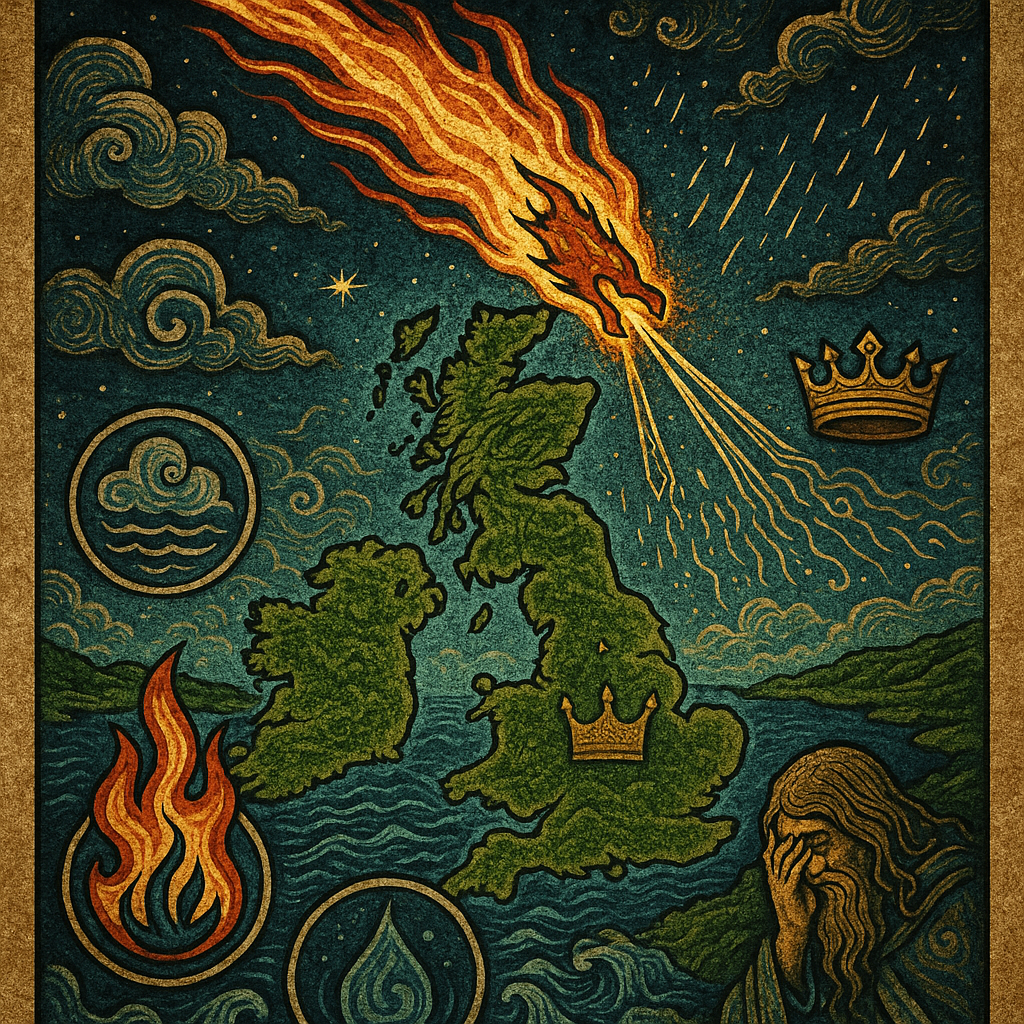
— Triads of the Isle of Britain“And then a Star of enormous size appeared… and from the dragon’s jaws, two beams went upward… and Merddin wept.”
— Brut Tysilio, c. 600s AD
I. The Island Before Kings – Prydein and the Elemental Constitution
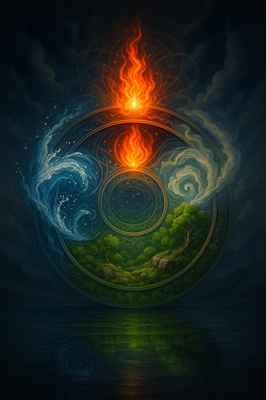
Before there was “England,” before the Saxon conquest, and long before the forged idea of British Empire, the land we now call Britain was Prydein—the sea-girt green land, a triadic realm of Cymmru, Lloegria, and Alban, organized not by conquest, but by balance. Not by tyranny, but by voice. The Triads speak not of barbarism, but of a civilization rooted in natural law, elemental equilibrium, and a sacred social structure:
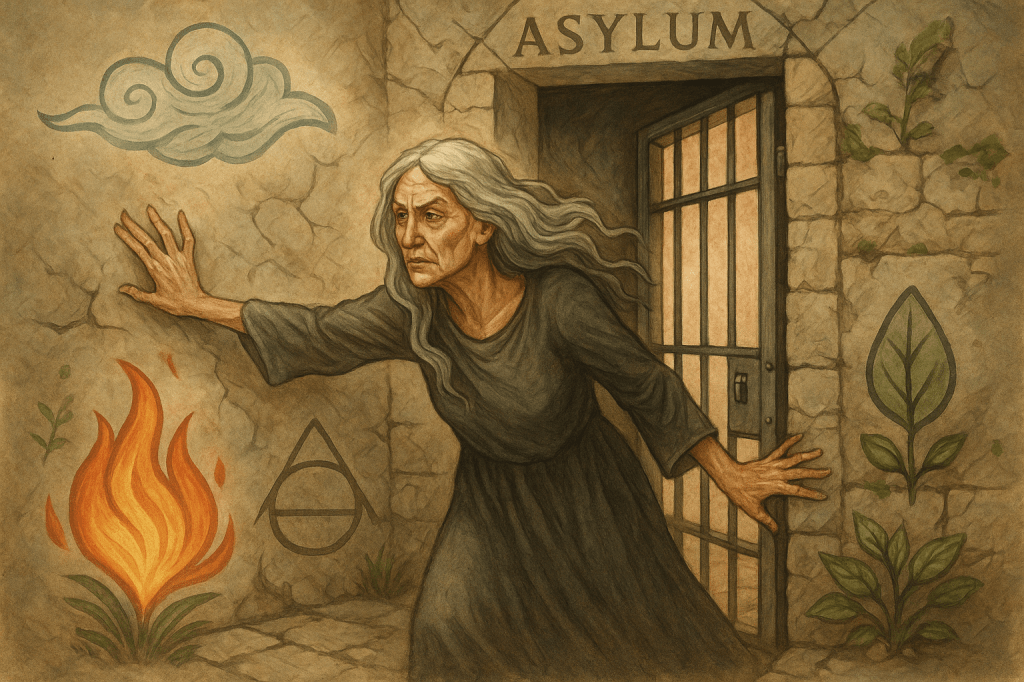
- Air (Mind/Law): Represented by the bards, judges, and family instructors, whose protection under law signals the elevation of truth, language, and memory.
- Fire (Spirit/Will): Expressed in the heroic ethos of Hu the Mighty, the just application of force, and the sanctuary granted to temples and roads—paths of holy Fire.
- Water (Soul/Emotion): Embodied in kinship bonds, clan protection, communal ownership, and the poetic resonance of the bardic class.
- Earth (Body/Form): Rooted in ancestral land rights, the protection of family, forests, and springs, and the deep moral embeddedness of the Molmutine Code, which offered liberty to all through birthright.
This was not a primitive land awaiting Caesar. It was an elemental nation.
II. The Triadic Crown and the Cymric Sovereignty
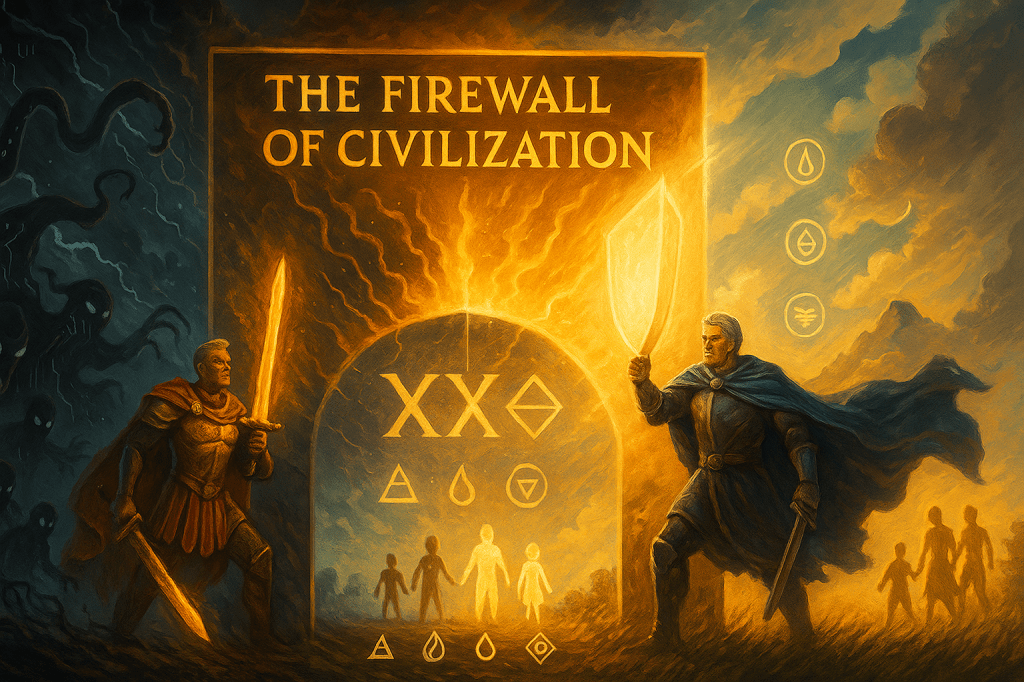
The ancient Cymry believed in triadic order—a sacred pattern encoded into memory, myth, and law. From the Three Pillars of the Nation (Hu, Prydein, Dyvnwal Moelmud), to the Three Free Things of every Briton (spring water, fallen wood, and unused stone), the society echoed the same Rosetta of the Four Elements that we have repeatedly articulate through the theme of this site:
- The Air of the Druid harmonized with the Fire of the King,
- The Water of the People flowed with the Earth of the Land.
The monarchy was not a dictator’s seat—it was the crown of a harmonious organism, established by the voice of the country. The law was not imposed—it was remembered. The land was not owned—it was inherited through stewardship.
Even the rights of women, children, foreigners, and the poor were protected in a manner unparalleled by any feudal system of later times. No Roman law, no Saxon charter, and no Norman decree has ever matched the clarity of this elemental justice.
III. The Fall of Balance – The Comet of 562 and the Wasteland of Albion
But something broke.
In 562 AD, a dragon-star appeared in the skies—so speaks the Brut Tysilio, that oldest surviving history of the Bryttaniaid. Not a mere omen, but a comet of fire, with shafts reaching toward Ireland and France, splitting into seven beams. The bard Merddin (Merlin), seer and speaker of Air, wept, knowing what it meant: the end of Emrys Wledic, the rightful sovereign, and the collapse of the elemental order.
What followed was not just a catastrophe—it was a reset of elemental disharmony:
- The comet was Fire unbridled, burning the Earth, melting stone, vaporizing forests.
- The boiling sea flooded the land—Water turned to wrath, drowning the lowlands and salting the fields.
- The air turned toxic, a poisoned Breath that made the western isles uninhabitable for over a decade—Air turned to Death.
- The body of the land, once fertile and balanced, was scorched, vitrified into glass—Earth made inert.
Archaeological evidence—vitrified hillforts, scorched ruins, and the population collapse from over ten million to under two million—confirms what the myths remember. This was no metaphor. This was Albion crucified.
The survivors—what few remained—fled to Brittany, to Armorica, to the memory of Cymric refuge. Thus the Arthurian Wasteland is not legend—it is collective trauma, encoded in myth, cloaked in chivalry, buried beneath the lie of “Dark Ages.”
IV. From Voice to Crown: The Rise of the Saxon Mind
When the land began to heal, it was not the old order that returned. The Cymric voice was fractured, the bardic line scattered, and the balance lost. Into this vacuum came:
- Saxon Fire, brutal and unchecked, enshrined in endless war-kings.
- Coranian Air, manipulative and cunning, rewriting history in Latin and law.
- Norman Earth, foreign and imperial, converting sacred land into feudal estates.
- And Water wept, the Cymric soul drowned beneath centuries of forgetting.
What the Historia Ecclesiastica and the Anglo-Saxon Chronicle omit is exactly what the Triads, the Brut, and the Annals preserve: that this was not simply conquest—it was a severing of elemental memory.
The so-called “Kings of England” begin not in 800 AD, but in rupture, in amnesia, in firefall. The Comet of 562 was both cosmic event and spiritual metaphor: the shattering of Albion’s inner Rosetta.
V. The Elemental Prophecy of Return
Yet in every myth, the Wasteland has a Grail. And in every cycle, balance can be restored. Albion is not dead. Her bones remain—the stone circles, the leylines, the bardic triads whispered in valleys and dreams.
The Molmutine Laws, the Triads, the ancient rights of Britons—these are not museum pieces. They are seeds. The comet did not erase the elemental order. It sealed it beneath the skin of forgetting.
Now, as empire collapses and history cracks, the elemental Isles stir once more.
- Let Air become truth again—bardic, sovereign, sacred.
- Let Fire be cleansed—desire reborn as courage, not conquest.
- Let Water rise—memory, soul, myth, reunion.
- Let Earth awaken—not owned, but remembered.
The Cymry are not gone. The island is not lost. The balance is not broken—only paused.
Let the comet be rewritten in flame upon the sky, this time not as warning, but as return.
 The Daily EleMental
Leave a comment